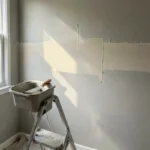


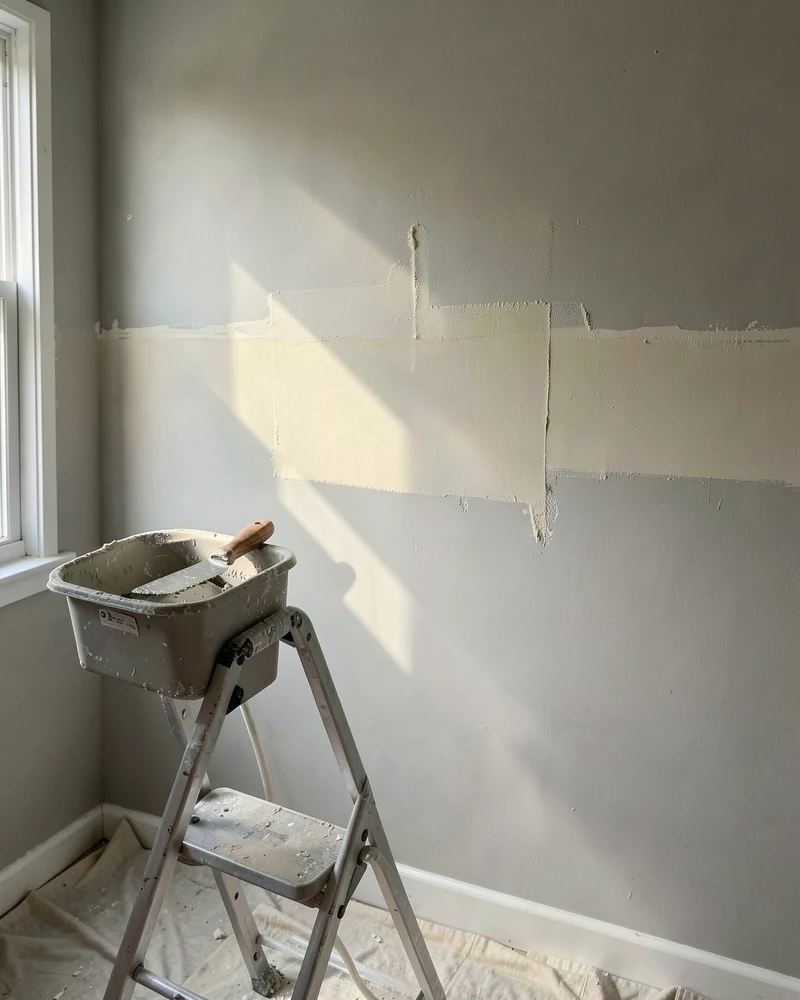
Drywall repair in Grand Junction is the step that decides whether a finished room looks painted or looks patched. Paint is a thin, even film. It follows the shape of whatever is underneath it, so side light from a window or a downlight picks out every ridge and every hard edge in a repair. Getting the wall flat and the texture matched first is what makes the finish look right.
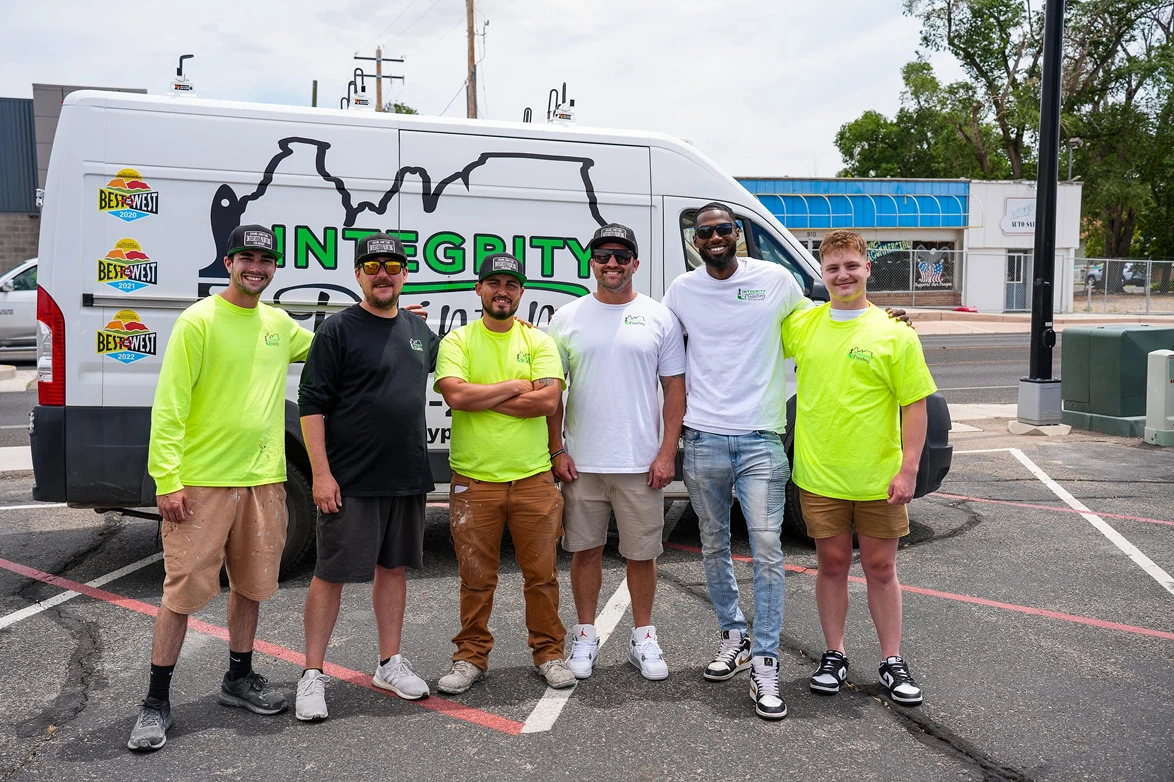
We have been doing repair and paint as one piece of work here since 2011. The estimate is free and itemised, and the workmanship carries a nine-year written guarantee.
What every drywall repair includes
- A free on-site assessment, with each repair measured and listed
- Soft, crumbling or water-damaged board cut back to sound material
- New board cut in and screwed to framing, joints set for taping
- Paper or mesh tape, then three coats of compound, each wider than the last
- Setting-type compound on deeper fills, lightweight compound for finish coats
- Sanding between coats, with dust contained and vacuumed
- Texture matched to the existing wall, tested on a board first
- Drywall primer sealer over every repair before finish paint
- Finish paint taken wall to wall so nothing flashes
- A final walkthrough with you before any payment is due
- A nine-year written workmanship guarantee
How our drywall process works
Cut back to sound board
A repair is only as good as the material around it. Soft or crumbling board comes out.
Fit and fasten
New board cut in, screwed to framing, joints set for taping.
Tape, then three coats of compound
Paper tape on flat joints and inside corners, mesh where a patch needs immediate strength. Then three coats of compound, each one wider than the last, with drying time and a light sand between coats. That is where the flatness comes from.
Feather wide
The edges get taken out far enough that the transition disappears under raking light. On a wall lit from the side by a window, that usually means feathering twelve to eighteen inches past the repair rather than stopping at the tape line.
Texture match
Knockdown, orange peel, skip trowel, sand or smooth, matched to the existing wall. We mix and test on a board, check it dry, and adjust the mix or the nozzle before anything is sprayed on your wall.
Prime
Fresh compound is far more porous than the painted wall around it, so it drinks in finish paint and dries to a duller sheen. A drywall primer sealer evens the porosity out, which is what stops the repair flashing as a dull patch through the finish coat.
Paint
Normally the whole wall from corner to corner, because a spot-painted repair shows as a sheen difference even in a perfect colour match.
Why texture matching decides the result
Filling is the quick part
Making the fill read as the same surface as the wall is the part that takes practice.
Three things have to match
Most homes in Grand Junction have a sprayed texture on the walls and ceilings, applied when the house was built. Matching it means matching three separate things: the size of the spatter, the height of the knockdown, and the density of the coverage. Miss any one of them and the repair reads as a different surface even after painting.
Age changes the target
A twenty-year-old texture has softened edges from cleaning and repainting, so a crisp fresh match can look newer than the wall around it. We match what is there now, not what it looked like when it was sprayed.
Settlement cracks get taped, not just filled
Filling those with standard compound alone often means they reopen in the same place within a year. Where we see recurring movement we tape the repair rather than just filling it, so the joint has something holding it together the next time the house moves.
It also means the estimate is worth reading closely. If your walls need work, you can see exactly what that work is and what it costs, and decide the scope with the numbers in front of you.
What we repair
- Nail pops and screw pops, which are the house moving rather than anything failing
- Cracks at window and door corners
- Impact damage from furniture, doors and general life
- Water damage, once whatever caused it has been fixed
- Failed or mismatched texture from a previous repair
- Tired walls that need full resurfacing rather than another patch
- Skip trowel resurfacing where a wall has too much history to keep patching
- Plaster over lath, which older homes here have in places
Fresh paint unifies the colour on a wall, which leaves texture and flatness as the only things left to notice. That is why the order runs board, tape, compound, sand, texture, prime, then paint, and why our estimates put the repair work above the paint line rather than folded into it.
Materials and technique
Setting-type compound. It hardens chemically rather than by drying, shrinks far less than all-purpose mud, and can be recoated the same day.
Lightweight all-purpose compound, which sands easily without gouging the paper.
Paper tape, bedded in compound.
Taped rather than filled, so the joint has something holding it across the next seasonal movement.
Metal or vinyl corner bead, fixed and coated in three passes.
Hopper spray for orange peel and knockdown, matched for spatter size and density.
Trowel for skip trowel and sand finishes, matched for pattern and depth.
Drywall primer sealer over every repair.
Texture is always matched with the same method that created it. A sprayed texture matched by trowel reads as a different surface, however close the colour is. On any home built before 1978 we work to EPA Lead-Safe programme practices as standard.
What drywall repair in Grand Junction costs
Priced by the number and size of repairs and by how complex the texture is to match, rather than by room. What moves your number:
- Number and size of repairs. Twenty nail pops is a different job from one four-foot section of damaged board.
- Depth. A surface dent is one coat of compound; a hole through to the cavity needs new board, taping and three coats.
- Texture. Smooth walls are the quickest. A heavy knockdown or a hand-applied skip trowel takes test boards and a longer match.
- Ceilings. Overhead work is slower, and popcorn ceilings need care to avoid disturbing the surrounding texture.
- Access. Stairwells and vaulted walls need staging.
- Water damage. Depends on how far the moisture travelled and whether insulation or framing behind the board is affected.
Usually quoted alongside the painting rather than as a separate job, because in practice they are one piece of work. Full breakdown on our painting cost guide.
Talk to Us About Your Painting Project

Common questions
Do you paint after repairing?
Yes. That is the normal order, and normally the whole wall so nothing flashes.
Can you fix water damage?
Yes, once the leak itself has been dealt with. We check the board and the cavity are dry with a moisture meter before new board goes in, because boarding over damp framing traps the problem.
Will the patch show?
Not when it is feathered wide, textured to match and primed before the finish coat. Those three steps are what make a repair disappear.
How long does it take?
Compound needs drying time between coats, so most repairs run two to three days before paint. Our dry air helps, but setting compound still needs its full window.
Can you match my ceiling texture?
Yes, including popcorn and knockdown ceilings.
Do you do full resurfacing?
Yes, including skip trowel over walls that have collected too much history to keep patching.
How much dust will there be?
Sanding makes fine dust, so we seal doorways, cover floors and vacuum as we go. On larger jobs we use vacuum-assisted sanding where the compound allows.
Do you repair plaster as well as drywall?
Yes. Older homes here have plaster over lath in places, and it takes a different fill and a different bonding approach, which we set out at the estimate.
Where we do this work
Across Grand Junction and Mesa County, and out to Montrose. Same pricing, same crews, same nine-year written guarantee wherever you are.