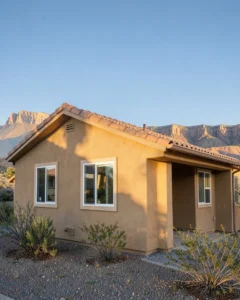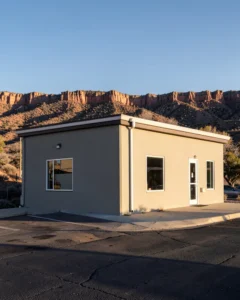
The Grand Junction climate is high desert, and that changes how a paint job is planned here, not just how the finished work looks once it is done. Five conditions specific to this valley decide product choice, timing and how long a coat actually lasts, and none of them are obvious from looking at a colour chip in a showroom somewhere else.
1. UV load
The UV index runs high through the summer here, well above what a coastal or northern climate sees for most of the year. UV breaks down the resin in a paint film over time, which is why south and west-facing elevations chalk and fade faster than north-facing walls on the same house. Better exterior paint resists this longer, which is part of why we coat with Sherwin-Williams and Benjamin Moore rather than a builder-grade product.
2. Daily temperature swings
Forty to fifty degree swings between daytime highs and overnight lows are normal here, and that range is unusual compared to most of the country. Siding, trim and stucco all expand in the afternoon heat and contract overnight, and that daily movement is what drives hairline cracking at joints and stress points over years of exposure.
3. Dry air and the recoat window
Low humidity means surface dry happens fast here, which sounds like an advantage and mostly is one. The trap is that a fast surface dry does not mean the coat has cured enough for a second layer. Rolling a second coat onto paint that has skinned over without fully curing causes lap marks that never level out. We plan the schedule around the manufacturer’s recoat window rather than compressing it just because the surface looks dry to the touch.
4. Freeze-thaw cycles
Water that sits in a hairline crack expands as it freezes, widening the crack a fraction every cycle through the colder months. This is most visible on stucco, where a crack too small to notice in autumn can be a real gap by spring. It is also why we recommend a look at exterior surfaces at the end of winter, catching what the freeze-thaw cycle opened up before it gets worse.
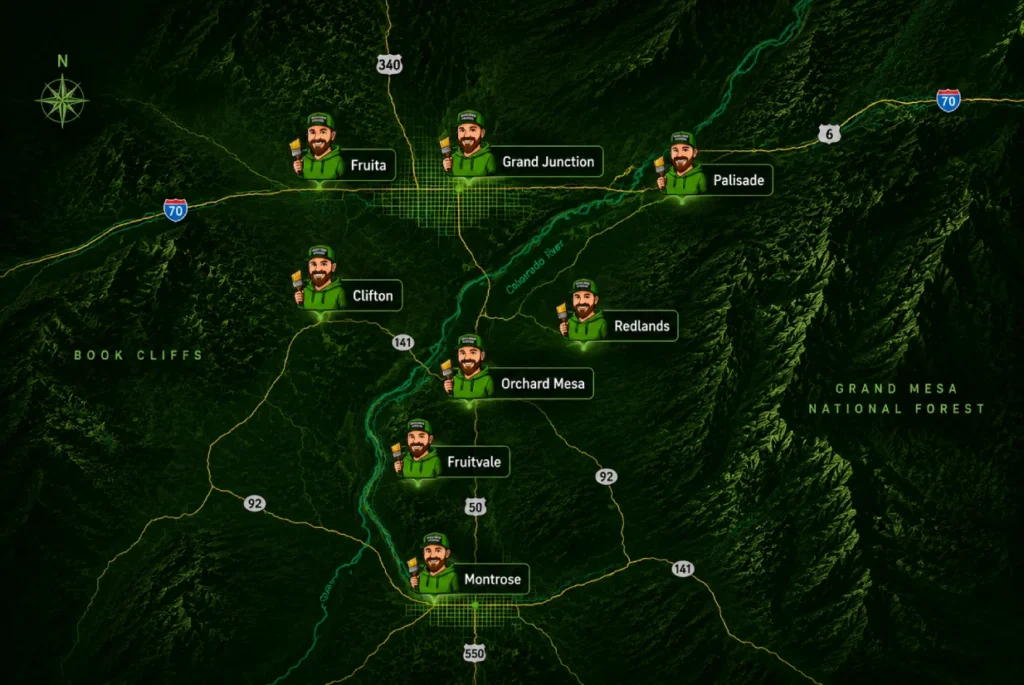
5. Elevation and exposure by town
Grand Junction, Fruita, Palisade and the rest of Mesa County are not identical in exposure. Higher and more open ground runs hotter in summer sun and colder overnight, which shortens the exterior repaint cycle at the exposed end of that range. Most valley-floor exteriors here sit on a five to ten year repaint cycle; higher, more exposed properties tend toward the shorter end of it. See our service areas for what is different town to town.
What this means for your house
None of this changes what colour you pick. It changes the product, the coat count, and when the crew shows up to do the work. A quote written for a south-facing wall in July should look different from one written for a shaded north wall in the same house, because the surface itself is in a different condition even though the paint colour on the can is identical.
This is also why a generic national painting guide, written for a climate with less UV, smaller daily temperature swings and higher humidity, does not translate cleanly to the Grand Junction climate. A recoat schedule built around a coastal climate’s assumptions will run too slow here, and a product chosen without accounting for the UV load will chalk and fade faster than its own label suggests. Planning around the local conditions rather than a generic timeline is the difference between a coat that lasts the full five to ten years and one that needs attention again in three.
See the painting cost guide for how these factors move a number, or exterior painting for how we plan around them on the job itself. Whichever town you are in across Mesa County, the estimate accounts for your specific exposure rather than a valley-wide average.